define scale of drawing by specificing object length civil 3d
Scaling Your Model or Parts of Your Model
In SketchUp, you can resize and reshape your model based on the relative sizes of your edges and faces. Hither's a quick overview of the bachelor options:
- Scale your entire model with the Tape Measure tool.
- Resize entities while maintaining their proportions with either the Record Mensurate tool or the Scale tool.
- Stretch or squish an entity to calibration with the Scale tool. For example, stretch a cabinet so information technology's twice its electric current width or narrow a automobile by 5 percent.
- Scale a unmarried component or every component in your model.
The following video shows how the Scale tool can calibration geometry proportionally or stretch its dimensions.
If you're looking for details nigh scaling your entire model or detailed steps that walk you lot through SketchUp's scaling features, check out the sections afterward in this article.
Table of Contents
- Scaling your entire model
- Scaling a selection proportionally
- Stretching or squishing geometry to scale
- Scaling components
Scaling your entire model
When yous want to scale your entire model, employ the Record Measure tool.
Tip: The Tape Measure tool enables yous to calibration precisely by specifying the desired dimension between two points. This line is referred to as the reference line.
To calibration an entire model, such as the floor plan in this example, follow these steps:
- Select the Tape Measure out tool (
 ) or press the T key. The cursor changes to a tape measure.
 - Measure the distance between ii points on your model. In this case, say yous know the width of the stairs needs to be 48 inches. Here'south how to measure that altitude:
- Click ane terminate of a line segment to set the starting point of a measurement. Apply the SketchUp inference engine to brand sure you click the exact point.
- Move the mouse to the end point of the aforementioned line segment. As yous motility the mouse, a temporary measuring tape line, with arrows at each finish, stretches out from your starting point.
- Click at the other end of the line segment, as shown in the figure. The final distance appears in the Measurements box.
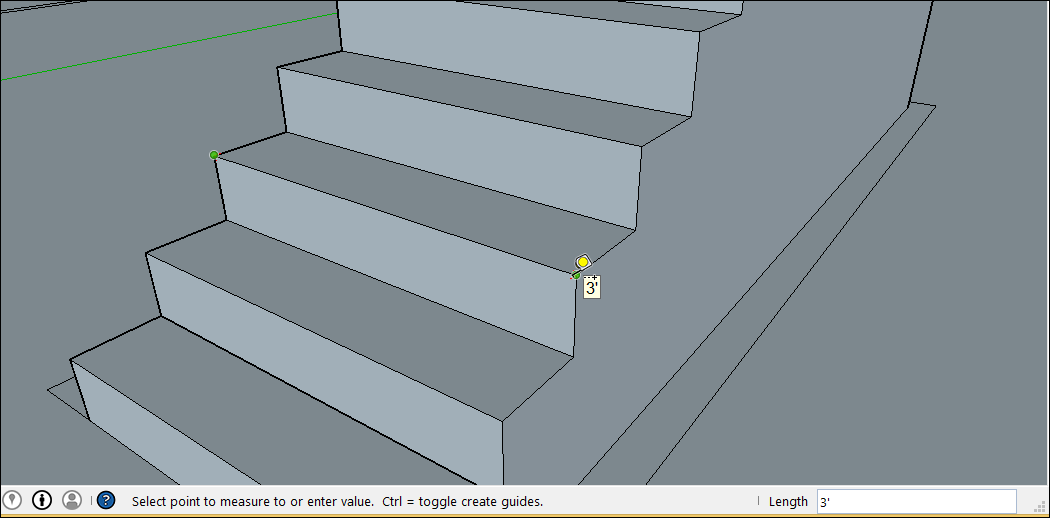
- Type a new size for the line, which appears in the Measurements box, and press Enter. This size is the basis for a proportional rescale of your model. In this example, the reference line is scaled to 48".
Tip: Y'all can use majestic or metric units. SketchUp understands both. Just exist sure to specify your desired unit if information technology's not your template's default unit.
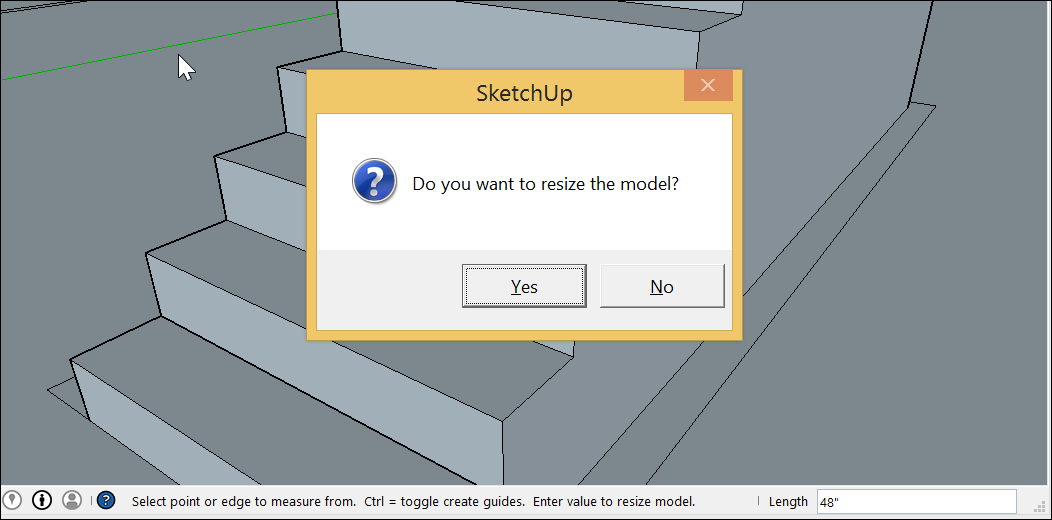
- When the following dialog box asks whether you want to resize your model, click the Yes push button, and the model is rescaled proportionally.
Scaling a selection proportionally
When you want to resize geometry within your model and maintain its proportions, you can use either the Record Measure tool or the Calibration tool. Your choice depends on how you want to fix the scale:
- To base the calibration on the size of a specific line, use the Tape Measure. For example, yous notice out one room in your floor plan can just exist 10 feet wide, but the rest of the floor plan can stay the aforementioned. Or you know a statue must be 3 meters tall.
- To resize your option based on a percentage of your original size, apply the Scale tool. For example, choose this method if you desire to increase your selection's size past 200% or decrease information technology to 50%.
To scale part of your model with the Record Measure, follow these steps:
- With the Select tool (
 ), select the entities y'all want to scale.
 - Context-click your pick and, from the context carte du jour that appears, select Make Group.
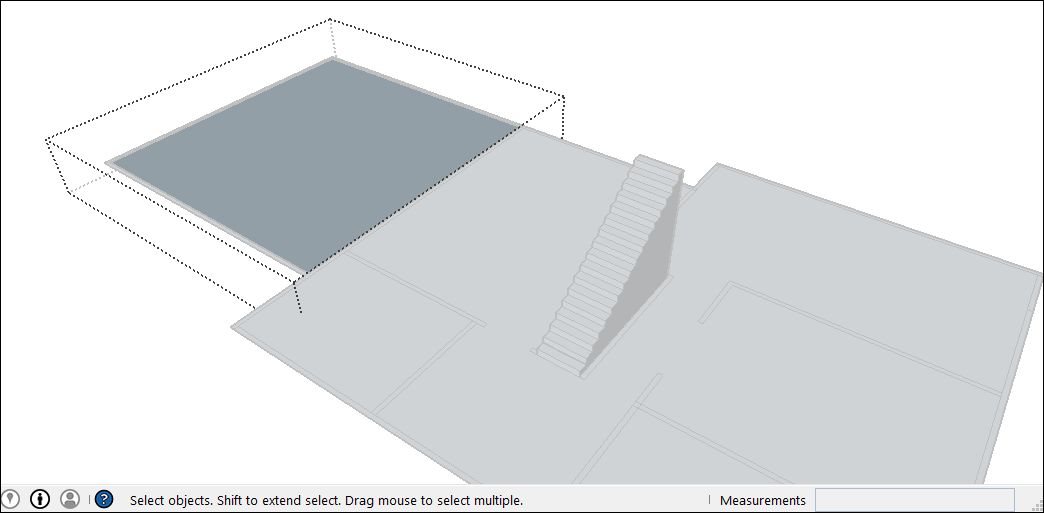
- Double-click the group. A box of dashed lines appears around the group, indicating that you've opened the grouping, equally shown in the figure.
- Select the Tape Measure tool () or printing the T fundamental.
- Click one stop point of your reference line. Use the SketchUp inference engine to make sure yous click the exact cease point.
- Click the other end point of your reference line. The electric current distance appears in the Measurements box, equally shown in the figure. In the example, say you need to decrease this width to x anxiety, due to issues on the site where the flooring plan will be congenital.
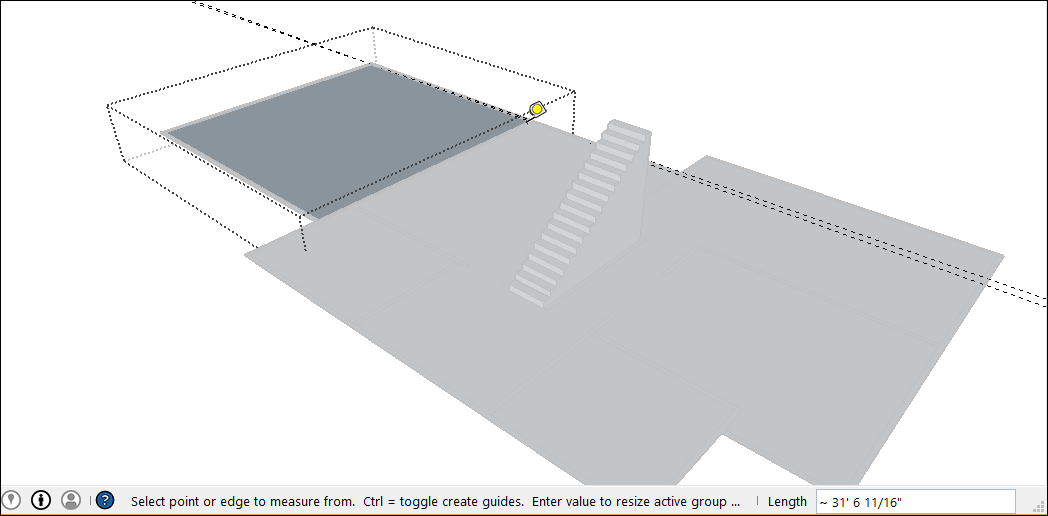
- Type a new size for the line (in this example, y'all blazon ten') and press the Enter central. This size will be used as the basis for a proportional rescale of your model. SketchUp asks whether you want to resize your group or component.
- Click the Yes push button, and your choice rescaled proportionally. Check out the result in the following figure. That's a much smaller room.
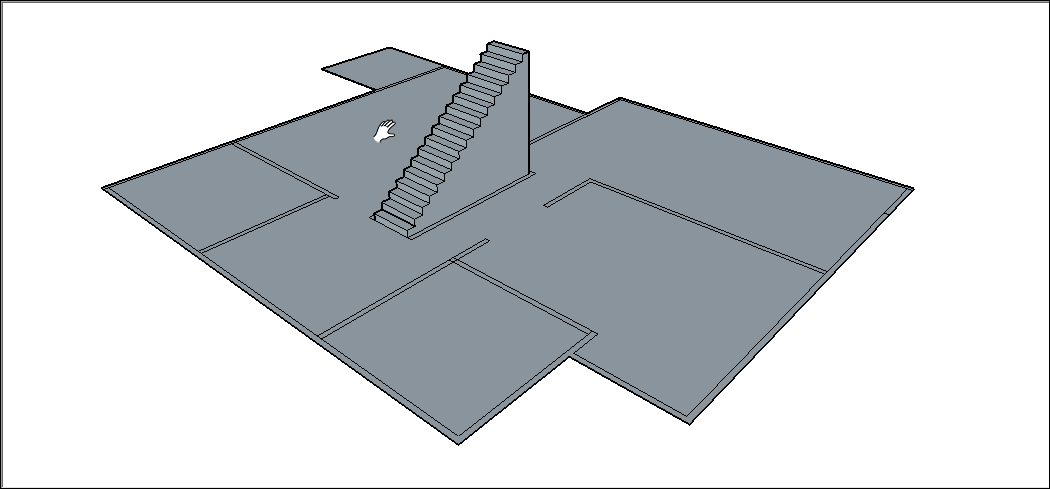
Note: This process also works with components. See Adding Premade Components and Dynamic Components for an introduction to components. The Scaling components section later in this article explains how scaling only affects a single component or all component instances in a model.
When yous want to scale your model proportionally by a percentage, the Scale tool tin do the job easily. Imagine y'all're non sure how to talk to your client about decreasing a room in their floor program to x feet wide, and so yous model an elephant in the room while yous think it over. Here'south how to scale that elephant, or whatsoever other option in your model, past a percentage:
- With the Select tool (), select the geometry you lot want to calibration. This footstep is of import if you lot desire to scale a circuitous 3D selection. If you have an easy selection, like a 2D shape or a surface entity, you lot can skip this footstep.
- Select the Scale tool (
 ) or printing the South key. A yellowish box with green grips appears around your selection, as shown in the figure. If y'all skipped Step 1, click the geometry with the Scale tool cursor.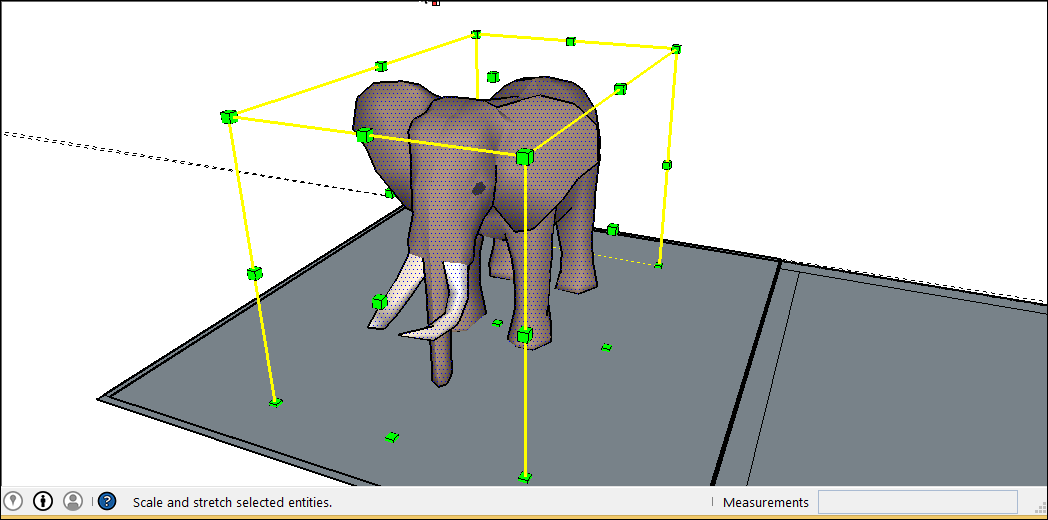
- For a uniform scaling, or one that keeps your selection proportional, click a corner scaling grip. The selected grip and the opposite scaling grip turn red, as shown in the following effigy, and in the Measurements box, y'all see a scale of ane.00, which means your geometry is at its original size, or scaled to 100%.
Alternatively, y'all can tap Shift to toggle Scale Uniformly which volition prevent the Scale performance from deforming the geometry.
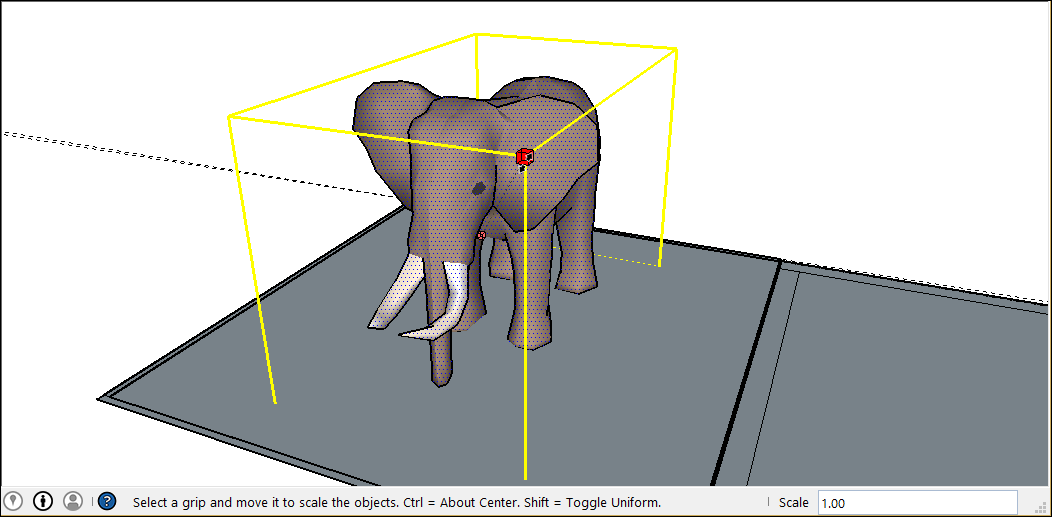
- Move the cursor to scale the entity. The Measurements box displays the scale dynamically. Press the Esc key at any signal to start over. To set up the scale from the eye instead of the opposite corner, tap the Ctrl primal (Windows) or the Option key (macOS) to toggle this functionality while you motility the blood-red corner grip.
- Click to set up your choice'southward new scale. Or type the desired scale dimensions and press Enter.
Note: Technically, in Step 5, you can type a dimension, such as 2m or 3", instead of a calibration dimension. Even so, scaling based on a dimension with the Record Measure is more often than not more intuitive.
Stretching or squishing geometry to scale
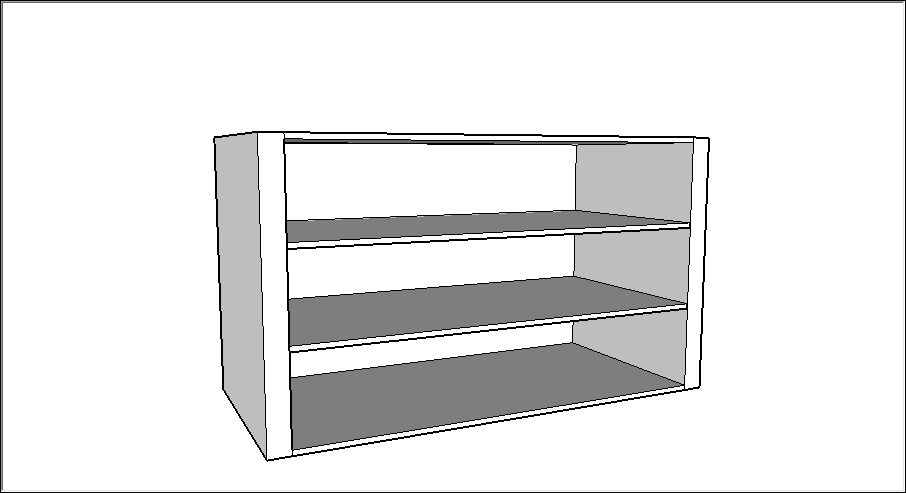
Sometimes, you need to calibration just i dimension of a model (or maybe two). To practice so, use the Scale tool's edge or face grips. Hither's how the process works, using a cabinet as an example:
- With the Select tool (), select the geometry you desire to scale. This footstep is important for a circuitous a 3D pick. Skip this step for an easy option, like a 2nd shape or a surface entity.
- Select the Scale tool () or press the Southward key. A yellow box with green grips appears around your pick. If you lot skipped Step 1, click the geometry with the Scale tool cursor.
- Click an edge or face grip (not a corner grip). The selected grip and the opposite scaling grip plough red, as shown in the effigy, and in the Measurements box, you see a scale of 1.00, which means your geometry is at its original size, or scaled to 100%. The Measurements box as well displays the axis direction for your calibration, such as Blue Scale or Red Scale. If y'all select an edge grip, y'all see two axes, such as Carmine, Green Scale.
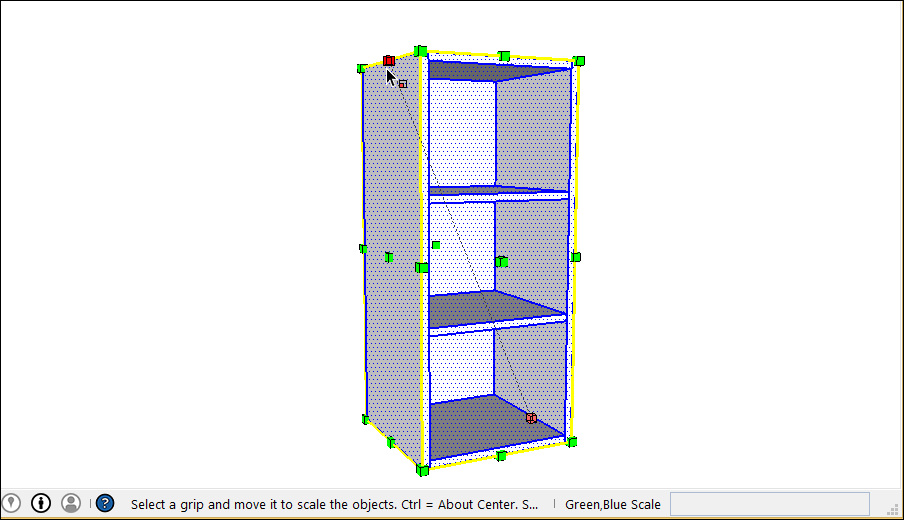
- Move the cursor to scale the entity. The Measurements box displays the calibration dynamically. Printing the Esc key at any point to kickoff over. To set the calibration from the center instead of the opposite edge or face, tap the Ctrl key (Windows) or the Option primal (macOS) to toggle this functionality while you move the red corner grip.
- Click to set up your selection's new scale. Or blazon the desired scale dimensions, and printing Enter. To set the scale on 2 or even three axes, type ii or three numbers, each separated by a comma, such as iii,2. In this case, you encounter the original cabinet was scaled to be twice equally broad but half the acme.
Tip: If you have trouble controlling the scale direction, attempt repositioning the drawing axes to your selection. To practice so, select Tools > Axes from the menu bar. With the Axes tool cursor, click corner you desire to utilize to align the cartoon axes. Then move the cursor so that it snaps the border to which you want to align your inferred axis and click to confirm the modify. (The inference is red, green, or blue depending on the direction y'all motion your cursor.) See Adjusting the Drawing Axes for details about working with the cartoon axes.
Scaling components
You can use these scale techniques on components besides as everyday geometry. (See Adding Premade Components and Dynamic Components for an introduction to components.) When you scale a component, even so, yous tin can resize a single instance of the component or all component instances in your model:
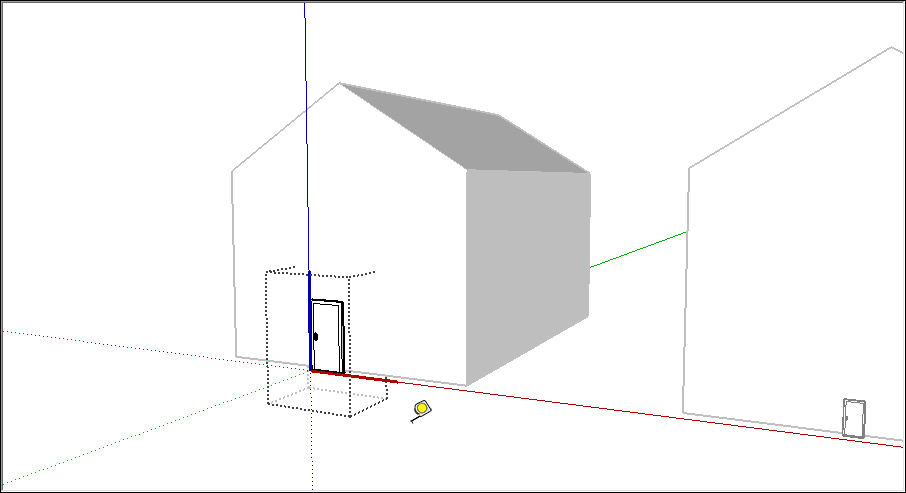
- Scaling a component changes only the private example. This characteristic allows you to accept differently scaled versions of the aforementioned component in your model. To scale a single instance, click the component example with the Calibration tool and use the grips to set up the new scale, using whatever Scale tool technique explained before in this article. The following figure shows scaling a door component downloaded from the 3D Warehouse.

- Scaling an entity within a component scales every component instance. To calibration an entity in a component, yous need to open the component past double-clicking it. Dashed lines announced effectually the component, and the lines and faces within the component go editable, equally shown in the following figure. With the component open, yous can, for example, scale a line entity. This action affects the component definition and, therefore, all instances of the component are scaled to friction match. With the component open, y'all can select a line, and therefore tin calibration with either the Calibration tool or the Tape Measure tool, every bit explained earlier in this article. Annotation, however, that a compatible calibration using the Tape Measure tool is often the easiest manner to scale all components in a model.
Source: https://help.sketchup.com/en/sketchup/scaling-your-model-or-parts-your-model
0 Response to "define scale of drawing by specificing object length civil 3d"
Enviar um comentário